Dropped Your Combo Back to the Lab Again
If yous complain about chemistry, major in biology or human biology, petition for 22 units twice a year, get aneurysms thinking near our disintegrating healthcare system, and/or wear strangely moisture scrubs to class, y'all'll inevitably be asked:
"Are you pre-med?"
Depending on how many years you've been at the grind, your affirmative will either be enthusiastic, despairing (because they've discovered your deepest darkest secret and will judge you to be a soulless monster with a really good GPA) or nonchalant (because you lot're totally not like all those other high-strung pre-meds, because you're, like, merely so chill).
But at that place'due south likewise the confessional "I used to be pre-med, but…"
Medical professionals, students and laypeople alike agree that the path to becoming a doctor is long and hard. They all tell you to recollect hard and think twice about whether all these sacrifices volition be worth it, and once you've washed that — think once more. And one of the biggest hurdles is getting into medical school in the beginning place. Anybody has their reasons for dropping out of the pre-med rail. In the wake of the many tears, regrets and headshakes of disappointment from every entity in the cosmos and your mom that ensue from that conclusion, we need to take a harder look at why pre-med is so notoriously difficult.
What lies behind that "simply"?
"A competent knowledge of chemical science, biology, and physics"
Stanford advises its pre-medical students to take "2 years chemistry with lab, 1 year biology with lab," and "one year physics with lab." They note that "some medical schools may require math and English language and some of the sciences crave math every bit a prerequisite." The improver of a behavioral science component to the MCAT (Medical Higher Admissions Test) in 2022 encourages students to take an additional grade in sociology or psychology.
This translates to six or 7 chemical science courses, five biology courses, three physics classes, two writing classes, and two to four math classes (including statistics), totaling from 18 to 21 pre-med courses, or 115 to 130 units. You lot can't major in pre-med, as they say, merely with that many units, yous could feasibly go degrees in Human Biology (min. 81 units) or Biology (86-102) with Japanese (min. 45), two humanities degrees (Comparative Literature min. 65, and History 63-74), or 1 in Information science (91-106) with a minor to spare.
These requirements were codified by the " Flexner Report ," an 846-page written report of the state of medical didactics in the U.S. and Canada published in 1910 past md Abraham Flexner through the Carnegie Foundation. Flexner'due south response to the question of "how much teaching or intelligence it requires to establish a reasonable presumption of fitness to undertake the written report of medicine under present circumstances" (23) was a "competent cognition of chemistry, biology, and physics" (25).
In regards to chemical science, in particular, Harvard instructor in anatomy Frederick S. Hammett gave a speech to the American Chemistry Society in 1917 virtually the need to instill robust chemical cognition in pre-medical students. "The true doctor must exist a true diagnostician. He tin non [sic] be a diagnostician if he lacks power of observation and power to carry on deductive reasoning. Where meliorate can he gain this fundamental training than in chemistry?" Students are not supposed to exist made chemists, per se, merely they should be able to have the diagnostic chapters and attention to detail that intense preparation in chemistry provides.
Which sounds reasonable. But as Donald Barr, M.D., professor of pediatrics and Homo Biology at Stanford, notes in his volume " Questioning the Pre-Medical Paradigm ," these requirements were neither new nor scientifically adamant. Regardless, it did have the effect of establishing the notion that "the extent to which a premedical pupil has succeeded in studying the sciences as an undergraduate is a reflection of the student's inherent intellectual ability" and tin gauge their future success equally a physician.
Who leaves the track: Race and gender
Of course, nosotros want doctors who know their science and medicine, who know how to think critically and analytically, who know how to work long hours nether pressure. But do undergraduate science scores truly reverberate a pupil's capacity to be a expert md? In our interview, Barr described how science grades predict performance in the 3 national licensure examinations (USMLES) interspersed between med schoolhouse and residency. According to Barr, "Your MCAT science scores and your undergraduate science grades predict your grades in the commencement two years of science classes in medical school, just not your clinical skills." MCAT verbal scores and not-cerebral characteristics are improve predictors of how well you practice in ward rounds.
In add-on, undergraduate scientific discipline grades are inversely correlated with empathy scores. "For decades, medical schools have been using science grades to 'weed out' weak students when in fact, who they're weeding out are the people with the all-time interpersonal skills, which are the best predictors of clinical skills down the road," said Barr.
Barr was inspired to investigate pre-med compunction when he heard "I used to exist pre-med, but…" coming more than from women and racial or indigenous groups that are underrepresented in medicine (URM) amidst his sophomore and inferior advisees. So he conducted a report following freshman who indicated an interest in pre-med upon entering Stanford. An average of 363 freshmen (~22% of the entering class) expressed an interest in pre-med. Of these, an boilerplate of 108 (~30%) were URM. Over the same time menstruation, an boilerplate of 294 Stanford students applied to at least one medical school, 50 of whom were URM. He found that attrition disproportionately impacted URM and female pre-med students. Almost 50% of URM students dropped out of pre-med, compared to 17% of non-URM students. Some other written report surveying UC Berkeley students found like results.
Many of these students cited chemical science as a deciding cistron to drop out of the rails. "Students hear that if yous tin can't do well in chemistry, you're not going to get into medical schoolhouse. And that was really coming from the pre-med advising part," said Barr. "Medical schools take historically used science grades as a marker of how qualified you are — and that'southward problematic."
But why is chemistry and so notoriously the greatest drib-off point for pre-meds? And why does it unduly touch URM and female students?
Chemistry: The "weeding out" grade
For many students, the word "chemical science" is synonymous with pre-med (and general frosh) misery.
In a survey I sent to various email lists at Stanford to explore pre-med attrition, almost all 108 undergraduates and recent graduates cited dissatisfaction with the pre-med courses every bit the reason why they either considered or did drib out of the pre-med track. Of these students, the large bulk explicitly cite the chemistry requirements as the master reason why they dropped out.
"Chemistry is important because information technology shows rigor," said Skylar Cohen '17, a senior co-terming in communications. "But if you put that in front of students without showing them the payoff, it'south an incredibly demoralizing surround."
At the time of our interview, Anthony Milki '17, a pre-med who wrote about his frustrations on being pre-med in the Stanford Arts Review, had just taken the Chem 141 final. "Information technology actually felt like I completely wasted my time studying. … like I could have not studied and done just as poorly," said Milki. "I go that they want a class distribution, simply at what cost?"
Chemical science professors Charlie Cox, Ph.D., Justin Du Bois, Ph.D., and Jennifer Schwartz-Poehlmann, Ph.D., lecturers in the introductory chemistry series, are very enlightened that students consider their courses as something that "weeds out" pre-meds. "It's so sad that nosotros take legions of people who recall chemistry is the worst subject they have ever studied," said Du Bois. "We're deeply committed to changing these attitudes, but these are hard and entrenched. … We're really trying to get this broader community to meet only how empowering understanding the language of chemistry tin be."
Contrary to the aura of failure that surrounds chemistry, they say, the numbers show otherwise. "What e'er confuses united states of america when we hear this from students is that no one failed 141 terminal quarter, less than 2% fail in the general chemical science series, and nigh of those cases are due to a significant exterior event beyond their control," said Schwartz. "Our mission is to help people larn. In that location is no do good to us to weeding people out."
In addition, exams are "extremely well-vetted" and take at least 25 hours to brand. "Nosotros run every examination between three to five TAs, and run it through the rigor before you even meet information technology," said Schwartz. Nor exercise the chemistry courses follow a true grading curve.
But if they aren't "out to get y'all," why does chemistry consistently evoke images of undue suffering, futility and tears?
One large reason is that chemical science is 1 of the first higher-level science courses students take — and the transition can be hard. "If it were biological science, there would probably be a lot of difficult decisions made in there too," said Schwartz. "The claiming is that compared to high school science, college is a very different inquire of students. And information technology's tough for people to modify."
"If yous look at your boilerplate organic chemistry problem, it'southward all about diagnosing the problem and ruling things out. That's how medicine is expert," said Du Bois. "We try very hard to construction our classes and our problems to enforce this kind of problem-solving skill. Merely it's not easy — well-nigh kids come out of high school and call back science is most sticking numbers into an equation and getting a black and white answer."
Cox makes a distinction between exercise and problems. "In high school we're used to doing exercises in which the numbers are inverse. You work problems over and over, learn the respond, and it becomes an exercise. You can't memorize organic chemical science."
They emphasize that there are many places to turn for help . "The department has collectively spent a ton of resource on service courses considering we know that nosotros're servicing such a broad population," said Schwartz. Office hours are run about every twenty-four hours of the week, alongside actress review sessions, practise exams, online resources, VPTL tutoring and academic skills development.
For students coming in with footling to no groundwork in scientific discipline, Schwartz and Cox jointly teach in the Leland Scholars Program , a summertime transitional programme designed to assist incoming freshman who are first-generation or from under-resourced schools. "The program tries to look holistically at the student and accost all the unlike challenges. We desire to brand sure that they become comfortable with the campus and the resources hither. They have 2 exams in the [Braun] lecture hall here and so they feel more acclimated when they walk in the first day."
Schwartz also teaches the companion courses, " Problem Solving in Science ," that run parallel to Chem 31A/B and 33. Here, instructors teach study skills and grouping problem solving, ensuring that students practice chemistry from Monday through Friday. "It's a partnership," said Du Bois. "It's near trying to encourage students to, similar whatever language, exercise a little chip every day."
Compounding the diversity of educatee science groundwork is the diversity of academic interests amidst students in introductory chemistry courses. "We're really a very service-oriented department," said Du Bois. "The students we teach are not interested in majoring in the subject but need to accept some kind of groundwork and educational activity in chemistry." An average introductory chemistry class is populated not only past students in the life sciences but besides in engineering, world systems, English and, believe information technology or not, some students there just for fun. The trouble that comes with that diversity is how to service everyone well when everyone has different needs.
The Chem 141/143 series " The Chemical Principles of Life " launched just this year in response to the disparity of student chemic and biological backgrounds in the biochemistry serial Chem 171/181. "We were not actually servicing the needs of the students as well every bit we could have because there was really a separate in the population of the students in the class," said Du Bois. In their third iteration of the serial, they divided the class so students with potent chemistry backgrounds would go into a more than chemistry-oriented 171/181, and students with strong biology backgrounds towards the jail cell biology-oriented 141/143.
They emphasize that they exercise listen and care most teaching and nearly their students. They don't assign junior faculty to teach introductory chemical science courses, and they practice frequent small-scale grouping evaluations to change courses in real time. "Just as your studying habits evolve, so do our teaching habits," said Schwartz.
"I tin can't tell you lot how much pleasure I become out of seeing a student who walks into Chem 35 knowing that it will be a horrific experience, and this is the form that will make or break their life in medicine. And by the end of the x weeks, they're saying 'This wasn't so bad,' or 'That didn't suck,'" said Du Bois.
"We're passionate about chemical science and we're enthusiastic about education chemical science," said Cox. "That's our ultimate goal."
It's clear that, though at that place are many resource available and changes are ever in the works, at that place are many students who are even so struggling and slip through the cracks. Chemistry remains i of the biggest reasons why students driblet out of pre-med. Until medical schools stop requiring chemistry prerequisites, students will demand to not just study difficult, merely study well.
Skipping the requirements: Medical school by sophomore yr
There is a workaround the pre-medical requirements, withal. The Icahn School of Medicine at Mount Sinai's FlexMed Plan is the kickoff early admission plan in the country. Students apply during the sophomore year, and with acceptance are "free to pursue [their] studies unencumbered by the traditional sciences requirements and the MCAT." In fact, they explicitly state that students " will non be permitted to have the MCAT."
Sounds like a dream come truthful, right?
David Muller, the dean for medical instruction at Mountain Sinai, states that "FlexMed is all near flexibility in your education and the opportunity to pursue what y'all love to learn. Information technology allows talented students with lots of initiative to 'flex' their intellectual, artistic, humanistic, and scientific muscles during college." Students are withal required to take some of the traditional pre-med requirements earlier matriculation, though most are reduced by ane semester to a twelvemonth.
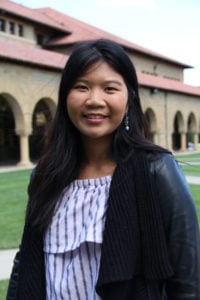
Natty Jumreornvong '17, a senior in Human being Biology and incoming FlexMed student, felt that pre-med requirements were "restrictive of [her] valuable fourth dimension at Stanford." She stumbled upon the program in searching for ways to free up space to pursue her interests and advance her career. "Honestly, I only Googled 'medical schoolhouse without organic chemistry'!" she said. "I was working on an electronic health records visitor at that time serving 5000 patients with chronic disabilities and spinal cord injuries in rural Thailand. I didn't have the time or energy to be taking all the pre-med classes. I wanted to take classes that would be helpful for my venture."
Jumreornvong also found FlexMed to be the best avenue into medical schoolhouse for her as an international student. "I accept a lot of friends who … are taking a gap year or ii to finish up their pre-med requirements and accept the MCAT. Taking gap years are unfortunately not the best selection for international students who are here on a student visa. As an international student, pre-med advisors tried to steer me away from applying to medical schools because they said it is very competitive. Some undergrad websites were even upfront about it," she said. "I feel like if I wasn't accepted into FlexMed, I would take given up on pre-med."
Donald and Vera Blinken, benefactors of the program, said,"Intellectual curiosity is equally of import every bit a stethoscope, and we're pleased to support young people who are interested in the earth and take broadened their horizons through the report of literature, history, and philosophy. It gives these students a real edge in their medical careers." And for the most part, these students do merely as well as their counterparts who took the traditional route. But why is such "intellectual curiosity" made available only when pre-medical requirements are taken out of the flick? If the humanities are supposed to provide a "real edge" to medical careers, why aren't they requirements?
And what about everybody else?
The pre-med Marshmallow Test
At that place are many implicit hoops lining the style to medical schoolhouse, couched in the maxim of " Do what you lot dearest the nigh and practise it well! " Floating in the air are "suggested" checkboxes that include an A-average scientific discipline and overall GPA (none of which may come from a community college), being in the 90 th percentile in MCAT score , research feel, a running listing of showtime-author publications, clinical volunteer experiences, all-encompassing shadowing, leadership roles and three to five glowing letters of recommendation. Go to any " What are my chances? " department on an online pre-medical forum and yous'll run into these components ranked, bargained over and passive-aggressively displayed like MMORPG stats.
In spite of all this, at that place is however the very real possibility of rejection from every med schoolhouse you spent $160 plus $38/school (not including the $0-150 secondary fees, and the $310 MCAT registration fee — of annotation, the AAMC recommends that you "maintain strong credit as you lot brainstorm the medical school application procedure") to apply for.
In that location's a lot of pressure to succeed — and for someone who has excelled plenty to get into Stanford, stepping out of this endurance race feels like you're either giving up or being lazy. But staying on pace often comes at the expense of opportunities for growth and development. "To practice really well in these classes, y'all have to give up certain activities and attitudes that would brand you a improve physician downwardly the line," said Milki. "You have to probably non read books outside of class, where you larn from people who care. You have to surrender being with your friends, though it's important to have a support grouping."
And oft, the time and attempt required to both stay afloat in pre-medical courses and not autumn behind on your resume checklist can be all-consuming. Damien Sagastume '17, who dropped pre-med to pursue teaching, was similarly frustrated by how pre-med stifles authentic passion and growth. "I feel like it's a very prescriptive thing —they'll tell you to be creative, simply I experience like a lot of pre-meds practice things because they experience like it's what medical schools want to run into," he said.
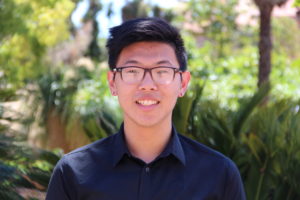
Jason Li '18, who took a break from pre-med his sophomore yr, oftentimes institute the requirements as a hindrance to his work in social justice. "The classes can feel really stifling for what I desire to practice," he said. "They're not necessarily the virtually relevant to what I want to pursue in community and public health … and they aren't totally relevant to my major," he said.
For Cohen, dropping out of pre-med gave him the mental space to more than fully engage with his time at Stanford. "Not having to imagine med school admissions boards looking at my transcripts has fabricated me enjoy Stanford rather than considering it as some brutal grooming ground," he said
And for Gigi Nwagbo '18, co-president of SWIM, she reconsiders being pre-med with every quarter. "I'yard always thinking 'Do I really want to do this'? 'What's my motivation'? 'Why am I into this'?" she said. "Every pre-med grade I have to accept that'south a niggling actress and not required for [my major], that'south just taking upward a lot of your time, that makes you skip out on your friends … You lot wonder why y'all're doing it."
Equally 1 survey respondent put it, pre-med necessitates a "suffer for the future" mentality, which is not necessarily a healthy habit. Nwagbo points to the allure of the faster, more lucrative pathways that surround us. "If you took CS, you get instant gratification," said Nwagbo. "To be a surgeon, it will take at to the lowest degree ten more years of school."
In a sense, being a pre-medical educatee is much like one big Marshmallow Test on steroids. Merely in spite of the long wait, and the doubts and setbacks that arise, many hold onto that stop goal. "I question it every day," said Nwagbo, "but you observe your reasons."
Stanford pre-med culture: Collaboration, fearfulness, and a nuance of anxiety
The stereotypical Pre-Med™ student, co-ordinate to popular opinion, is someone who is mercenary in their extracurriculars and robotic in their emotional valence. They neurotically monitor their GPAs and are allergic to anything that won't be on the examination. They are "cutthroat," in that they might very well literally cut the throats of their fellow cutthroat peers to have one less promising bidder to worry virtually. Nosotros hear stories well-nigh pre-meds who would give the wrong answers to someone request for help, kicking away another student'southward dropped eraser during exams, sabotage another student's lab results, or slash the tires of a commuting student and so they wouldn't skew the bend. These are only stories. Only what makes these stories more horrifying is that we wouldn't exist surprised if they were actually true.
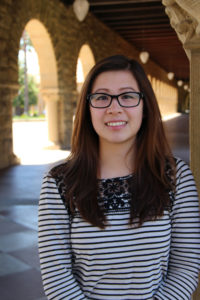
Luckily, based on the aforementioned survey and qualitative interviews, there is a general understanding that Stanford'south pre-med civilization is non as cutthroat as other schools. In fact, there are many students who view Stanford's pre-med culture to exist collaborative. Nwagbo establish that "people don't see each other as competition — more as colleagues." Michelle Chin '17, co-president of SWIM with Nwagbo, has also found that the right peer support can brand for a generally positive pre-med experience, even with the intensity. "Nosotros really intendance about our pedagogy because we want to be good doctors, simply we support each other also. And that'south something that I'1000 very grateful for. I made a lot of close friends from but doing p-sets and studying together."
And in that location are a number of pre-medical student groups that aim to provide resources and back up for students from a diverseness of backgrounds. These include SWIM , the Stanford Pre-Medical Clan ( SPA ), the Stanford Pre-Medical Asian Pacific American Medical Student Association ( APAMSA ), Chicanos/Latinos in Health Education ( CHE ), the Stanford Black Pre-Medical Organisation ( SBPO ), and Natives in Medicine ( NIM ), among other health and medicine-related groups. It helps to see people who are like yous who face similar challenges as you all go forward.
Merely at that place is likewise a big contingent of students who feel that the pre-med culture at Stanford is far besides competitive. Milki finds the pre-med environs toxic. "Stanford inherently breeds this competitive feeling that is really unhealthy," he said. "It necessarily means I desire other people to practise desperately so I tin can practise well because of the bend, and information technology's simply really antithetical to how doctors should be. … I can't help but experience similar 'I hope people flop this test so I can do well.' There is definitely a top-to-bottom arrangement that forces you to be really scared. And when y'all're scared, y'all're irrational, and you first antisocial other people and being selfish."
His experiences fabricated him cognizant of an implicit hostility and self-destruction that the pre-med track can create for students. "I've simply seen and so many people crying subsequently exams in chem. … In that location'south a degree of stress where y'all offset to make bad decisions and doing things that are not good for yourself. A lot of these classes really brood that," he said. "I'yard not actually getting much out of it. I'm not learning well or doing well. Information technology'southward frustrating to feel stupid — and it'southward frustrating to have hard work not pay off."
Of course, we care nigh grades. Information technology'south very likely that many of us had no thought you could get something less than an "A" on your transcript. But in many respects, the pre-med gauntlet is a identify where intellectual vitality atrophies. Every bit one survey respondent put it, "I wish that pre-meds … would focus more on their actual passion towards their classes and studies, rather than beingness so grade- and upshot-focused. … I wish pre-meds would spend more than time asking probing, interesting questions and not simply take the information at hand as fact. In a chemistry class, for case, I wish pre-meds would have more respect for some other educatee who asks genuinely interesting questions, even if at the expense of review session fourth dimension."
Though pre-meds at Stanford might not outright sabotage each other, in that location is a running anxiety that begins from the get-go bad test form in chemical science to med schoolhouse admission results. And sometimes appetite begins to look hostile. The paradox is that while we all hold that we want well-rounded, mentally stable and compassionate doctors, the lengthy gauntlet of requirements does very little to support students in those capacities.
How many of those doctors accept we lost in pre-med, in medical school, in residency?
The prestige factor
Nigh people who accept an involvement in going into medicine typically bespeak to their desire to help people. In the same survey of 108 current Stanford undergraduate and recent graduates in 2017, about all respondents cite a desire to provide service and care. Many cite a general involvement in biological science and science or being inspired and encouraged by a family member who is a physician. As 1 respondent put it, "It felt so admirable of a career to be able to spend my life directly impacting the livelihoods of others. The humanity of the role resonated with my aspirations to modify the world for the better."
But if we all we want is to exist able to aid other people, why not become a teacher, a social worker or a policymaker? Why not go into public health or piece of work in some NGO or nonprofit or for-turn a profit-for-social-good? Of all the ways that we can assist other people and "change the world for the better," why does information technology have to be a profession with one of the longest training requirements , the most grueling hours , the highest burnout rates , and the highest risk of death by suicide ?
It could be that some people strongly desire direct patient interaction and care. Only if that'due south the case, then why not consider becoming a nurse practitioner or a medico'southward assistant, where you lot'll be able to do about just every bit much as the physician with competitive pay , more than contiguous patient interaction, shorter preparation requirements, and greater elbowroom for a more hospitable lifestyle?
In the same survey, a little less than one-half had considered wellness professions outside of medicine. When asked why, the majority cite lower bacon and social status and less prestige and authority. And this is what underlies the expect of confusion that many a well-meaning professor, parent or mentor, among others, volition requite you lot once you tell them. And it frequently becomes a dingy niggling cloak-and-dagger. Sarah Harris '09, nurse practitioner student at UCSF, found little back up among her peers and mentors. "When I talked to my counselor virtually it, he straight up told me it would be a waste of my Stanford didactics to do anything merely medical schoolhouse." So information technology becomes a game of justification — a desire "to help people" is non enough for these professions, regardless of the magnitudes of bear on they might accept over your average physician.
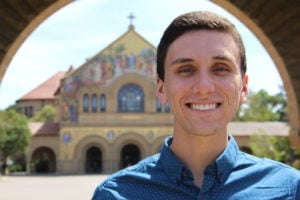
Sagastume wrote almost his determination to drop pre-med and pursue teaching in a Medium article called " Circular Dreams and Square Holes ." In the commodity, he contrasts telling his parents his conclusion to become a high school biology teacher to his feel of coming out — support vanishing in disbelief, and a hope that "This is probably just a phase."
In our interview, he spoke about how he was inspired to go into education considering of its long-term bear upon, and the mixed reception he received upon making that decision. "I was pre-med was because no i was going to 2d guess that. It'south a lucrative career that looks skilful on paper," he said. "I'm a start-gen college student, and going to Stanford and being a doctor is similar the next step upwardly. … And to be a teacher, it's similar going a footstep downward."
His parents have since grown more accepting of his decision. But they still have their own notions of what is "the best" for their son. "I'chiliad considering going to Harvard considering they have a really practiced teacher education program. … And they're all 'Y'all should go there!' They're even so defenseless upwardly in this idea of prestige. … Information technology'southward frustrating considering they're still looking for that. But they understood that this was the best decision for myself, as much as they wished I'd be a doctor and have financial security."
It's true that going to Stanford comes with the expectation of going on to do something that is either A) lucrative, B) prestigious, C) notable , or D) massively impactful, or a combination of the 4. Careers that satisfy the higher up typically autumn into the hallowed golden triad of doc, engineer, lawyer (with the exception that y'all manage to state a page on Wikipedia, or get a spot in Forbes 30 Under 30 or Fourth dimension 100 — then anything is totally O.Grand.). Regardless of what we pursue, nosotros must always be upwardly bound — to justify the sacrifices that were made to get here and to deserve the spot nosotros earned in this rather fine institution.
Nosotros tin't deny that these "footstep-downward" professions are valuable. We'd withal want only the best teachers for our children, and the best nurses for our patients. It shouldn't be considered a "noble" cede or a cop out to cull to pursue careers that are just as meaningful and disquisitional as existence a doctor. And if the but reason why you're going into medicine over some other profession is because of the prestige and the salary, what are yous going to say in your interview?
The pre-med "canoe"
Unlike a number of other pre-professions that are freeform enough to give you the opportunity to explore, the seemingly rigid structure of the pre-med track often generates a deep-ready anxiety well-nigh "falling backside" or falling off the train altogether and getting left behind in the bushes.
The track begins every bit before long as you lot check the box on your Stanford forms that yous're interested in medicine. You might be paired upwards with a pre-major advisor who has some grade of experience in the medical field. If not, you'll soon meet with a pre-med counselor who volition give you a canvas of paper mapping out the residue of your four years. By the end of your first year, you should exist on your way to at to the lowest degree the second half of the chemistry series, with several hours of clinical experience and a few leadership and enquiry assistant positions in your pocket, a summer gig in healthcare, and, ideally, a budding spiritual romance with a faculty member you'll inquire to write a letter of recommendation three or four years down the line.
This is what's recommended past the Stanford Pre-Medical Association'due south pre-med timeline in their unofficial handbook, and suggested by Undergraduate Advising and Research , the AAMC , the Princeton Review , and most colleges. It may or may not sound like a lot; it certainly encourages you to be proactive.
Simply the trouble of hopping on lath so quickly, as we have seen, is chop-chop feeling like you lot're scrambling, locked in, and unable to exit. Said 1 survey respondent, "Information technology was difficult to take time to explore whether medicine is the correct path for me because there were and then many pre-med requirements that I felt if I did not take them right abroad, I would fall behind. Every bit a issue, I felt a fiddling trapped and resentful."
Barr suggests changing the metaphor — from pre-med "runway" to pre-med "canoe."
"The rail will get you there — yous just go direct. But," he pointed to a map of the Cardinal Valley. "Let's say instead of boarding a railroad train, you go on a canoe. You want to paddle upwardly the San Joaquin River through the California Delta to leave to the bay. As nosotros travel along the river, many watercourses diverge off into unlike paths. There are recreation areas nosotros can stop by and eventually return back to our original pathway to the bay. The Delta has a rich network. Wouldn't information technology exist a shame to say I have to go out to the Bay as quickly equally I can?"
"There are multiple flexible means to prepare for medical schoolhouse," he said. "It's not merely if you tin't practise the outset two years of pre-med then forget it. … Information technology's upward to you. Don't think of it as in that location is only i mode to go in that location. Yous choose the mode that'southward best for you."
Nosotros hear about " non-traditional " pre-med pathways and know that they exist. Just information technology ways more than than merely majoring in something that doesn't have "bio" somewhere in its proper noun. A non-traditional path begins with an open mindset, where the opportunity to become a doctor demand non start or end with undergrad and doesn't necessarily involve a timeline or a checklist.
And this often makes for a more enriching time at Stanford. "In carving out my own path, and I've plant a lot of support and mentors where I did not expect to," said Li. "I've really come up to appreciate what Stanford has to offer and how many doors it opened for me."
Barr tells his advisees to alter the question. "Don't enquire yourself if you want to be a pre-med — ask if you want to be a medico. If the reply is yep, then become to med school." Yep, you practice have to brand the class. Merely graduating from Stanford should be telling enough. "The issue is not if are you smart enough to go to med school, merely if yous want to exist a doctor. If you're non sure if you want to be a physician, in that location'southward no indicate in going to med schoolhouse. And if you're not sure you lot want to go to med schoolhouse, there'due south no point in investing all your undergrad time in pre-med courses. Once you're sure yous're certain yous want to exist a doctor, then get yourself ready for med school."
There are people who took ten gap years who at present work as doctors. There are extension programs and post-bacs, and ways to plan it out and so you don't end upwardly broke. In that location are many ways to get to where y'all desire to exist, and there are people willing to support your journeying at that place.
"There are multiple paths to condign a physician, and at that place is no one best path," said Barr. "Each person has to find the path that fits them best."
Improvements and changes
A little over a century after the Flexner Report, medical schools have heard, and they are starting to alter.
Donald Barr points to a 2013 article in the New England Journal of Medicine on how the AAMC is shifting towards a more than "holistic review" of medical school applicants. In one table, desirable md traits such as "commitment to service," "empathy," "chapters for growth," and "emotional resilience" are mapped onto application data elements similar history of engagement with service, essays and letters of reference, adversities overcome and "distance traveled" in life experiences. "Intellectual ability," shown in part past "academic tape," is merely one of many components in a holistic applicant.
He likewise pointed out that the MCAT has changed from assessing "scientific discipline recall" to "science competency." It now has a section on the psychological and social foundations of behavior. And it focuses on the chemical science and physics relevant to biologic systems. As Barr notes, "Med schools are beginning to drop form requirements in lieu of demonstrated competency, leaving it more up to the students to figure out how to accept the courses that volition assist them learn the material." Stanford Medicine , for instance, "does not take specific form requirements, simply a recommended grooming for the study of medicine."
Of course, the way nosotros teach introductory scientific discipline courses and how we onboard students interested in pursuing medicine can be improved. "In that location are many types of changes [we tin make]," said Barr. "Curricular changes, changes in how you evaluate applicants, but also changes in the mindset of students who are thinking nigh existence doctors — then you don't feel like if you got a C+ in a scientific discipline course, that'south it for your chances of beingness a physician."
Barr points out Harvard's two semester Life Sciences foundational courses , implemented in 2006. Courses are jointly taught by the chemistry and biology departments, designed to account for students' different high school science backgrounds and enable students to have more focused pathways into science based on their personal interests.
Cohen suggests a survey course almost the journeying to becoming a doctor. "A lot of people decide to drop pre-med based on chemistry, which is not representative of the career," he said. "I would much rather that Stanford offered some kind of course to give people a better sense of what pre-med or being a doctor was actually like, rather than students dropping out based on a chemistry course that has very little relation to what you'd actually exist doing from day to day."
Changes are existence made. Though there isn't yet information to run into what affect they volition have, we must go along to provide feedback and work towards a new epitome of what is means to be a doctor, and who gets to become a physician. And paramount to this effort are students themselves, and how they believe pre-med will serve them every bit they go forwards to careers in medicine and elsewhere.
Going forward
But as changes are being made, what exercise nosotros do in the meanwhile? Whether or non you decide to make a iv- or 14- or 20-yr programme, remember that y'all are capable. Remember to await for support outside of advising, and interact. Do non be daunted past classes, hold the sunk price principle to heart, and don't be agape to driblet out or stay in.
Pre-med dropouts and diehard pre-meds alike have some words of wisdom:
- Give information technology a shot — but don't feel that you're jump to it
- In fact, don't commit to pre-med until your sophomore or junior yr
- Spread the requirements out — don't feel rushed about finishing everything
- Explore everything you can
- Immerse yourself in what a doc does day-to-twenty-four hour period
- Call up there are innumerable equally (or more) impactful careers out there
- Things that feel useless can nevertheless be useful down the line
- Be passionate well-nigh things that need to be fixed
- Be passionate. Menses.
- Don't feel sorry. Don't feel pressured. Don't feel scared.
- Go to part hours
We demand doctors who are equally diverse every bit the populations they serve. We demand doctors who care nigh other people. We need doctors who read books and make art. Nosotros need doctors who believe in the fine art of medicine. We need doctors who are committed to social justice. Nosotros demand doctors who are healthy, happy and unabashedly human.
We demand you.
Contact Vivian Lam at vivlam25 'at' stanford.edu.
Source: https://stanforddaily.com/2017/06/03/the-pre-med-drop-out/
0 Response to "Dropped Your Combo Back to the Lab Again"
Post a Comment