Did the Mountain Tribes Make the Art of Basketry
Basketry
Southern California basketry, tóonavish, is recognized worldwide for its quality. Our baskets are renowned for their exceedingly tight weaves, beautiful textures, and intricate designs. The Pechanga Cultural Center and Government Heart frequently showroom a number of Pechanga's carefully preserved baskets.
Our baskets are vital to our civilisation, traditions, and history. Their designs – some of which are quite intricate – oftentimes capture an event in time, tell a story (frequently known only to the weaver), or reveal the cultural connections of the weaver. The shapes and sizes of the baskets are besides every bit varied as their patterns.
A Basket Revitalization
Amongst many Tribal nations, basket weaving, practiced since time immemorial, is enjoying a gimmicky resurgence. The 'atáaxum accept long held a desire to protect and revitalize this of import element of California Indian culture. Now, many modern weavers are finally receiving proper compensation for their work. Years – and oftentimes decades – of weaving develop i'southward reputation equally a weaver, and skilled teachers are highly respected in the Native community.
Pechanga handbasket weavers, similar those from many tribes, face the constant claiming of finding places to get together handbasket materials, and some have become vocal advocates of sustainable country use. Their piece of work educates agencies, environmental groups, and the public about traditional establish direction techniques equally practiced by Native American handbasket weavers. Through methods such as pruning, digging, sowing, burning and selective harvesting, they testify how to achieve optimum plant growth and desired characteristics amid Native establish species.
Most traditional gathering sites take been lost to private holding owners, development, agriculture, and and then on. In response to this crisis, some California Native basket weavers, every bit de facto site monitors, have initiated an open dialogue with agencies such as the Woods Service, Bureau of Land Management (BLM), National Park Service, and California Department of Parks and Recreation. The offset Handbasket Weavers Gathering in 1991, an inter-tribal attempt, created a forum where handbasket weavers could speak directly to representatives of public country agencies. Their work helps to bear upon modify in state and national ecology policies while bringing an increased knowledge of the value of traditional native land/resource management priorities and practices for use in a variety of projects.
The Pechanga tribe honors everyone who is dedicated to the attempt required to become a weaver.
BASKETRY MATERIALS:
Basketry is more than just weaving. It represents a balance with the environment: Collecting, preparing, aging, and dyeing the necessary materials must all be done at specific times of the yr. Today, weavers are constantly searching for the all-time materials, which is sometimes the result of a prime growing location, but more often, it is the outcome of special care given by the weavers. This includes almanac harvesting or pruning, burning when possible, and polite chat: a good weaver volition always talk to the plants. Some of these plants are hundreds of years old and have been visited by several generations of weavers, and then they know u.s.a. well.
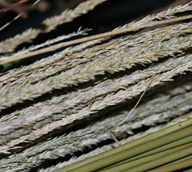 | Preparation of weaving materials can exist very dull. The deergrass flower stalks need to exist stripped of their seeds and chaff. This requires slow and patient passing of the blossom stalk through a leather strip. (A weaver will often suffer several fine splinters piercing fingers and hands as the work progresses. The splinters usually resist being removed by simply breaking upwardly beneath the skin and refusing the grip of tweezers.) |
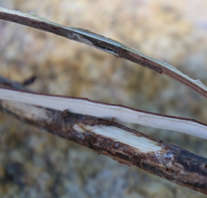 | Sumac, which is likewise chosen skunk bush or sour berry, must be collected when the sap is downwardly, preferably in late wintertime. The long, leafless stalks are collected and separate into two or three pieces. Each weaver will develop a personal preference on preparing sumac. It is easier to split up and size the material immediately after harvest, but some weavers prefer to split the material and so dry it for up to two years before sizing because dried sumac doesn't smell as much. The strips are commonly white in color and are nigh often used undyed. |
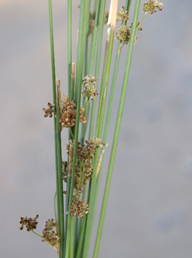 | Juncus, too known as wire grass, is some other plant used in weaving. The stalks of the juncus are gathered and divide into three pieces just similar sumac. Like sumac, training of juncus is dependent upon the preferences of the weaver. Juncus produces a green stem and will retain its color until it is exposed to sunlight. At the base of operations of the stalk, juncus will produce a length of reddish-brown textile varying in length from a few inches up to eighteen inches earlier turning greenish. This chocolate-brown or red juncus is one of the mutual colors used in weaving the designs in the baskets. In one case juncus is split and sized, it is placed in the sun so that the light-green color can be bleached out. One time the pieces are bleached, they are ready to be dyed. Many agents can be used to dye juncus, including walnut hulls, elderberry leaves, atomic number 26-rich mud, and even rusty nails. The juncus and dyeing agents are placed in a container of h2o and soaked for two weeks. The result is black juncus. |
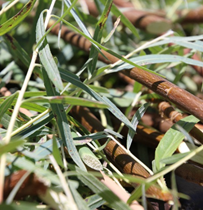 | Reddish Willow is the primary material from which large granary baskets are made. Willow granaries are traditionally used to store acorns. |
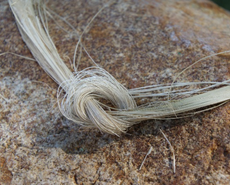 | Yucca Fiber Yucca fibers are often used as the foundation for a handbasket's start. |
Weaving Techniques:
Traditional Pechanga weaving techniques share many similarities with other Tribes of Southern California. Nosotros brand our baskets using the Curl Method – wrapping deergrass bundles with a strip made from juncus or sumac.
Starting a basket is considered to exist 1 of the virtually difficult parts of weaving. Most baskets are started by forming a bundle with yucca cobweb, so wrapping it with the selected material. Subsequently completing two or three rounds, the weaver begins to insert bloom stalks from the deergrass until the yucca fiber is spent and the stalks make upwardly the main foundation of the basket.
An awl is used to pierce the tiptop border of the package then that the juncus or sumac can be passed through and wrapped effectually the successive bundle. Awls are fabricated of os, metal, or a cactus thorn. A deer os awl was preferred prior to European contact but was often replaced with metal needles when they became available. Almost weavers at present utilize both bone and metal awls depending upon the fabric and the style of the weave.
Patterns:
'Atáaxum baskets often characteristic two or more horizontal blackness bands, and/or diamonds, squares, triangles, or zigzags, "net" patterns of connected diamonds, "stair steps" of bands or boxes, or "whirlwind" designs. Some of these designs can as well be seen in pre-contact rock art today, and their use in multiple art forms indicates that the images are significant.
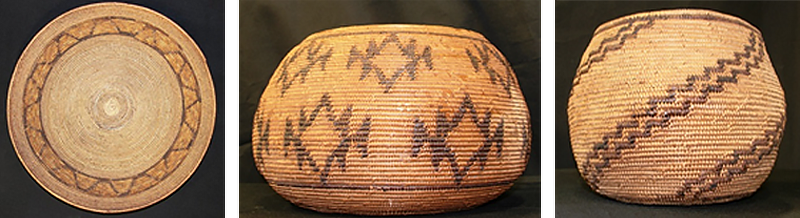
Depictions of animals and plants native to Southern California are common themes seen on many baskets. These images may exist representations of things that people saw every twenty-four hour period, that were artistically pleasing to the weaver, or they may have a deeper, spiritual significant known only to the artist.
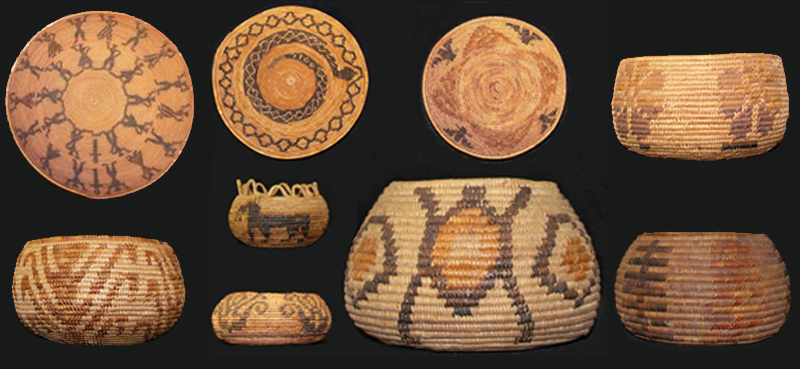
The use of human being figures in Southern California basketry is rare. The baskets that testify groups of people together may have been created to commemorate celebrations or other important gatherings, while the baskets with solitary man figures may correspond family members, tribal leaders, or people who played significant roles in oral histories.
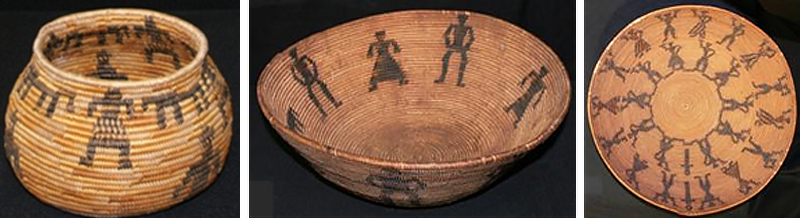
Source: https://www.pechanga-nsn.gov/index.php/culture/customs-and-traditions/basketry
0 Response to "Did the Mountain Tribes Make the Art of Basketry"
Post a Comment